

A Comprehensive overview of Modern Radiology Technique

Modern radiology has transformed the field of medicine by providing sophisticated imaging techniques that enable precise diagnosis and effective treatment planning. This overview explores the major radiological techniques employed today, highlighting their applications, advantages, and limitations.
1. X-Ray Radiography
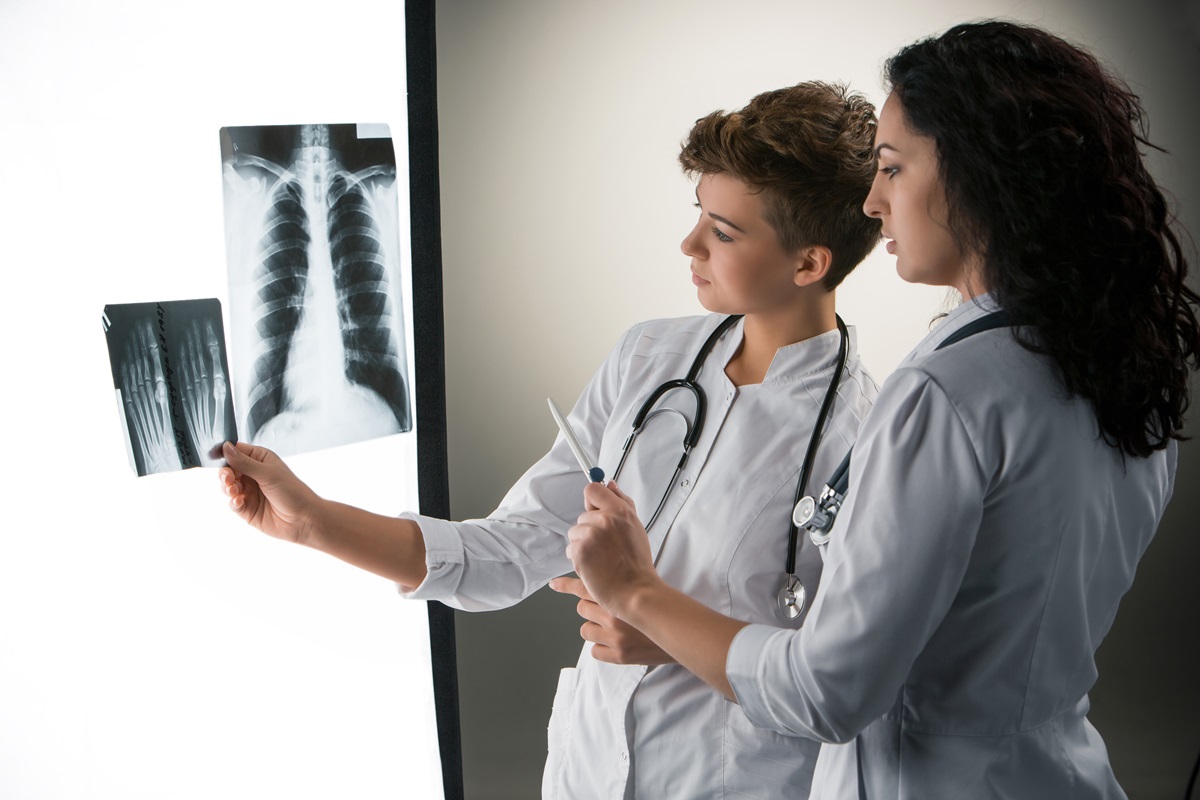
X-ray radiography is one of the oldest and most widely used imaging techniques. It utilizes electromagnetic radiation to capture images of the body’s internal structures.
- Applications: Commonly used for detecting fractures, infections, and abnormalities in bones and joints. Chest X-rays are vital for diagnosing pneumonia, lung cancer, and other thoracic conditions.
- Advantages: Quick, cost-effective, and widely available.
- Limitations: Exposure to ionizing radiation and limited ability to differentiate soft tissues.
2. Computed Tomography (CT)
CT scans use X-rays combined with computer processing to generate cross-sectional images of the body.
- Applications: Essential for diagnosing trauma, tumors, vascular diseases, and complex fractures. CT angiography is particularly useful for evaluating blood vessels.
- Advantages: Provides detailed images, allowing for 3D reconstruction and accurate localization of abnormalities.
- Limitations: Higher radiation dose compared to standard X-rays and relatively expensive.
3. Magnetic Resonance Imaging (MRI)
MRI uses strong magnetic fields and radio waves to produce detailed images of the body’s soft tissues.
- Applications: Ideal for imaging the brain, spinal cord, joints, and soft tissues like muscles and ligaments. Functional MRI (fMRI) is used in neuroscience to map brain activity.
- Advantages: No ionizing radiation and excellent contrast resolution for soft tissues.
- Limitations: Expensive, time-consuming, and contraindicated in patients with certain metal implants or claustrophobia.
4. Ultrasound
Ultrasound employs high-frequency sound waves to create real-time images of internal organs and structures.
- Applications: Widely used in obstetrics, cardiology, and abdominal imaging. It is also valuable for guiding interventional procedures like biopsies.
- Advantages: Safe, non-invasive, portable, and does not use ionizing radiation.
- Limitations: Limited penetration in dense tissues or air-filled structures and operator-dependent image quality.
5. Nuclear Medicine
Nuclear medicine involves the use of small amounts of radioactive materials (radiotracers) to visualize physiological processes.
- Applications: Includes positron emission tomography (PET) and single-photon emission computed tomography (SPECT). Commonly used for cancer staging, cardiac function evaluation, and detecting infections or inflammatory conditions.
- Advantages: Provides functional information about organs and tissues, complementing anatomical imaging.
- Limitations: Exposure to radiation and limited availability of specialized equipment.
6. Fluoroscopy
Fluoroscopy provides continuous X-ray imaging in real-time, often during diagnostic or interventional procedures.
- Applications: Used in barium studies, cardiac catheterization, and orthopedic surgeries.
- Advantages: Real-time imaging facilitates dynamic studies and guided interventions.
- Limitations: Prolonged exposure to radiation and relatively low resolution compared to other modalities.
7. Interventional Radiology
Interventional radiology (IR) employs imaging guidance to perform minimally invasive procedures.
- Applications: Includes angioplasty, stent placement, tumor ablation, and embolization.
- Advantages: Reduces the need for open surgery, lowers recovery times, and is highly precise.
- Limitations: Requires specialized expertise and equipment, with some risks of complications like bleeding or infection.
8. Dual-Energy X-Ray Absorptiometry (DEXA)
DEXA is a specialized form of X-ray used to measure bone mineral density.
- Applications: Primarily used for diagnosing osteoporosis and assessing fracture risk.
- Advantages: Low radiation dose and quick procedure.
- Limitations: Limited to specific assessments and does not provide detailed imaging of other structures.
9. Hybrid Imaging
Hybrid imaging combines multiple imaging modalities to enhance diagnostic accuracy.
- Applications: PET/CT and PET/MRI are commonly used in oncology, neurology, and cardiology.
- Advantages: Combines anatomical and functional data for comprehensive evaluation.
- Limitations: High cost and complex operation.
10. Emerging Technologies
Modern radiology continues to evolve with innovations like artificial intelligence (AI), 3D printing, and molecular imaging.
- AI in Radiology: AI algorithms assist in image interpretation, reducing diagnostic errors and streamlining workflows.
- 3D Printing: Creates physical models of anatomical structures based on imaging data for surgical planning.
- Molecular Imaging: Focuses on cellular and molecular processes, offering insights into disease mechanisms.
Challenges and Considerations
Despite advancements, radiology faces challenges like radiation exposure, cost, and accessibility. Ensuring patient safety and maintaining ethical standards in the use of AI are critical considerations. Moreover, the need for specialized training and equipment often limits the availability of advanced techniques in low-resource settings.
Conclusion
Modern radiology techniques play a pivotal role in contemporary healthcare, enabling early diagnosis, personalized treatment, and improved patient outcomes. As technology advances, the integration of multidisciplinary approaches and innovative tools will further enhance the field, making it indispensable in the practice of medicine.
