
The Advantages and Disadvantages of Investing in a Rapier Sword

The rapier sword, a thin, long sword with a pointed tip, has intrigued historians, sword collectors, and martial artists for centuries. Renowned for its application in fencing and duels, the rapier was an important part of European culture, especially during the Renaissance and early modern periods.
Today, it remains a sought-after item for collectors, martial arts practitioners, and those with an interest in historical weaponry. However, like any investment, purchasing a rapier sword requires careful consideration of its pros and cons. In this article, we’ll explore the advantages and disadvantages of investing in a fencing sword, focusing on its uses, value, and appeal in today’s market.
Pros of Investing in a Rapier Sword
Historical Significance
One of the main benefits of owning a rapier sword is its historical significance. The rapier is a legendary weapon that was instrumental in European history between the late 15th century and the 18th century. It was mainly employed for fencing, especially in dueling situations, where skillful thrusting skills were essential. A rapier sword is an immediate link to an era of history that has been marked by rich art, culture, and political intrigue. Having a rapier can be a rewarding possession for history enthusiasts because it’s a tangible fragment of the past.
Suitable for Fencing
For anyone who is interested in the study of fencing or historical European martial arts (HEMA), the rapier sword is a worthwhile investment. Its light weight, long length, and precise tip make it a great practice sword to use when learning to fence. Contemporary fencing swords like the epee borrow their design from the classic rapier. Rapier swords are used by numerous fencing schools and martial artists today in training, so the weapon is very practical for anyone interested in the pursuit of this art.
The rapier’s long range and dexterity in thrusting methods enable fencers to hone their craft and learn the art of precision. From a beginner to an experienced fencer, the rapier provides a great means to improve your reflexes, coordination, and swordsmanship in general. Furthermore, certain fencers are focused on historical fencing, using authentic replicas or even original rapier swords to stage duels and combat scenes from the Renaissance and early modern eras.
Aesthetic Appeal and Collectibility
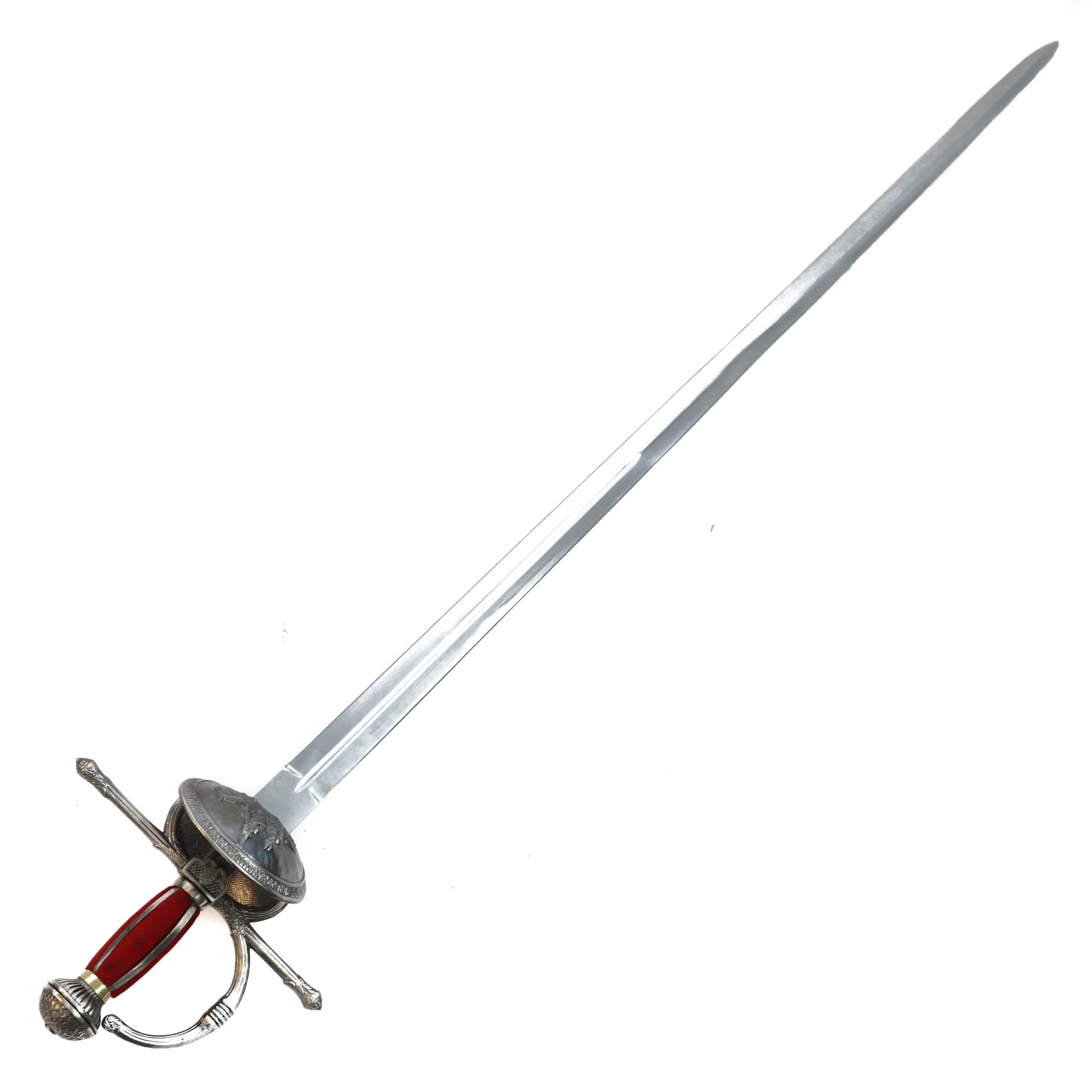
Rapier swords are renowned for their beauty and ornate designs. The hilt of the fencing sword will normally have elaborate guard systems, flashy pommels, and engraved details that maximize its aesthetic appeal. These aesthetic features render rapiers desirable among collectors who value the historical weapon’s beauty and craftsmanship. The blade’s slender form, coupled with its high degree of balance, provides the rapier with a sophisticated and prestigious appearance.
Old rapiers, especially those produced by renowned swordsmiths or in such well-known centers of sword-making as Toledo, Spain, or Solingen, Germany, can appreciate in value. For collectors, the rapiers are not just usable weapons but also valuable commodities that may appreciate in value. With the market for antique swords still on the rise, buying a rapier sword can be an opportunity to possess a precious and potentially appreciating item.
Practicality and Longevity for Practice
As opposed to some of the other swords that are mostly used for display purposes, the fencing sword is sometimes constructed to endure the practice process. Replicas today are constructed from materials such as high-carbon steel, which is appropriate for fencing or training. A quality rapier sword may last decades and serve as both a learning device for martial artists and a nice piece for collectors to own.
Despite modern replicas, the shape of the rapier makes it conducive to functional usage in practice environments, allowing the purchaser to opt for usage either for display purposes or for actual physical use. Practice or sparring rapiers tend to be produced with blunt or rounded tips, creating a safer choice for collectors to practice with, without the risks involved in practicing with a sharpened tip.
Cons of Investing in a Rapier Sword
High Quality Rapiers’ Cost
One of the biggest disadvantages of investing in a rapier sword is the price. Quality rapiers, especially those that are authentic or crafted by master artisans, can be very pricey. Antique rapiers, especially, are collector’s items that can cost thousands of dollars, depending on their age, condition, and provenance. Even replicas that closely resemble the design and craftsmanship of historical swords can be very expensive.
For the budget-conscious individual, buying a rapier may not be a cost-effective choice. Although mass-produced, modern fencing swords are cheaper, they lack the same historical value and artistic appeal as an authentic rapier. For collectors, though, the cost is usually worth it due to the rarity, beauty, and future potential value of the weapon.
Limited Practical Use Outside of Fencing
Though the rapier sword is created mostly for fencing and dueling, it’s not the best weapon for overall combat or personal defense. The rapier is a thrusting sword, i.e., it’s made for precision strikes over broad slashing attacks. This makes it extremely useful in one-on-one combat or dueling, but less practical for other fighting situations. Consequently, the investment in a rapier sword would not have much practical value outside of fencing or historical reenactments.
In the contemporary era, the rapier is not employed as a functional combat sword, thereby restricting its application for self-defense or general martial use to anyone searching for a sword. Unlike broad swords or personal protection weapons, the rapier does not provide a mechanism to deflect attacks from more than one person or in close distance.
Difficulty of Maintenance
Although the fencing sword is sturdy, caring for an antique or high-quality fencing sword can be difficult. Antique rapiers especially need special care to protect their value and integrity. Rust, corrosion, and handling wear can detract from the appearance of the sword and, in some instances, its price. Cleaning and maintenance on a regular basis can keep the blade in the best possible condition.
Modern replicas of rapiers are simpler to maintain, but they also need some form of care to avoid rusting and other forms of damage. Moreover, due to their intricate designs and fine details, rapiers might require special care, like touch-ups to the guard or hilt, which might involve greater costs and effort.
Limited Space for Display or Use
Rapier swords with detailed hilts and extended blades may not be easy to store and show. If you’re paying for a rapier sword solely for its looks, you’ll want to have enough room to show it in a safe manner. If not stored appropriately, it may cause harm, such as blunting the blade or breaking the guard.
For martial artists or collectors who wish to practice with a fencing sword, the rapier’s size and design can pose challenges in terms of space. Whether you’re practicing at home or attending a fencing school, the sword’s length may require additional room to maneuver effectively, especially when practicing in confined spaces.
Conclusion
Purchasing a rapier sword can be a thrilling and worthwhile experience for anyone who loves history, fencing, or sword collecting. The historical value, beauty, and functionality in fencing of the sword make it an asset to any collection or training program. But the expense, limited functional applications, and upkeep needs are valid considerations before spending the money.
For serious collectors, martial arts practitioners, or historical weapons aficionados, the rapier sword provides a special blend of looks, functionality, and heritage. In the end, whether or not the rapier is an investment worth considering will be driven by the interest, budget, and purpose intended for the sword by the individual buyer. Upon consideration of pros and cons, you can better make an educated decision and consider whether the rapier is suitably appropriate to add to your collection or suit your training program.
